

Search Google or Type a URL: Which One Is Better For You?
It usually starts with a small pause and thinking about whether to search Google or type a URL. You open your browser, click on the address bar, and hesitate for a second. Do you type the website name directly, or do you just search for it on Google and click the first result? This tiny moment of indecision is something almost every internet user experiences daily, often without even realizing it.
That single bar at the top of your browser, commonly known as the Omnibox in Google Chrome, quietly handles both actions. It lets you search Google a query or type a URL in the same place, making browsing faster but also a bit confusing if you do not understand how it actually works. The choice you make there can affect how quickly you reach your destination, how accurate your results are, and even how securely you browse.
For example, if you already know the exact website you want, such as your email dashboard or a trusted tool you use every day, typing the web address directly can save time. On the other hand, if you are researching a topic, comparing services, or trying to discover new content, searching on Google often gives you better context and more options. Both actions serve different purposes, yet many users treat them as the same thing.
There has long been an informal debate among internet users about which method is better. Some people rely heavily on Google search because it feels flexible and forgiving. Others prefer typing a URL because it feels faster and more intentional. In reality, there is no single right answer. The smarter approach is knowing when to search and when to type.
Understanding the difference between search Google or type a URL helps you browse with more control and confidence. It reduces unnecessary clicks, improves productivity, and helps you get exactly what you are looking for without frustration. As we move deeper into an era of AI-powered search, autocomplete, and predictive suggestions, mastering this simple habit becomes even more valuable.
In the sections ahead, we will break down how this search or type feature works, when each option makes sense, and how you can use it strategically for everyday browsing as well as professional tasks like research and digital marketing agency in Surat. If you want to move faster online and make smarter choices with every search, it all starts right here.
What Is an Omnibox?
The Omnibox is the single input field you see at the top of modern web browsers, most notably Google Chrome. At first glance, it looks like a traditional address bar where you type a website URL. In reality, it does much more than that. It works as both an address bar and a search engine, combining two actions into one simple experience.
When you type something into the Omnibox, the browser instantly tries to understand your intent. If it looks like a web address, Chrome treats it as a direct URL and takes you straight to that site. If it looks like a question, phrase, or keyword, it automatically runs a Google search instead. This is why you often see the prompt “Search Google or type a URL” inside the bar. It is not a suggestion. It is an explanation of what the Omnibox is capable of doing.
What makes the Omnibox especially useful is how intelligent it has become over time. You can use it to perform quick mathematical calculations, get instant answers to simple questions, check conversions, or even see definitions without opening a separate page. For example, typing a basic equation or a question like the time difference between cities can give you an immediate result right in the dropdown.
From a user perspective, this flexibility saves time. There are moments when typing the full website address feels faster, such as opening a tool you use daily or accessing a familiar dashboard. In other situations, searching with keywords makes more sense, especially when you are exploring a topic, comparing options, or unsure of the exact website name.
The Omnibox adapts to both behaviours. It allows you to switch seamlessly between searching Google or typing a URL without changing tools or tabs. That convenience is why it has become one of the most relied-on features in Chrome and other modern browsers. Once you understand how it interprets your input, you can use it more intentionally and make your browsing smoother and more efficient.
Also Read: Best Social Media Marketing Agency in Surat with Expert Services
What Is Search Google or Type a URL?
“Search Google or type a URL” is the default message you see inside your browser’s address bar before you start typing. This address bar is often called the Omnibox because it serves more than one purpose. It allows you to either search the web using keywords or directly open a website by entering its web address. Although the wording may appear slightly different at times, such as “search or type web address,” the meaning remains the same.
At its core, Search Google or type a URL feature is designed to simplify how people access information online. Instead of deciding between a search box and a URL bar, you get a single place to do both. You can type a few words related to what you are looking for, press enter, and Google will show relevant results. Or, if you already know the website you want to visit, you can type the full URL and be taken straight there.
These two options stand out as the most common ways people find websites today. While information can also come from social media, apps, or direct links, searching Google or typing a URL remains the primary gateway to the web for most users. The real question is not whether either option works, because both do. The question is which one makes more sense in a given situation.
Should you search for a website name on Google and then click through the results, or should you type or paste the exact URL into the browser and skip the search results altogether? The answer depends on what you know and what you are trying to achieve. Each method has its own advantages and small trade-offs, which become clearer when you look at how they work in practice.
Using the Google Search Option
Search engines exist to make information easy to find. With a few keystrokes, you can discover websites, images, emails, guides, tools, and almost anything else available online. When you use Google search, you are relying on its indexing system to scan billions of web pages and present the most relevant results for your query.
This option is especially useful when you do not know the exact URL of a website or when you only remember part of its name. You simply type the brand name, topic, or a related keyword into the browser’s address bar and press enter. Google then displays a list of results, allowing you to choose the one that best matches what you are looking for.
However, this process does take a bit more time. You may need to review multiple results, open more than one page, or refine your search with more specific keywords. If the website you want is not well optimized for search engines, it may not even appear near the top, which means more scrolling and clicking.
To use Google search effectively, the basic steps are straightforward. You open Google in your browser, enter your query, press enter, review the results, and select the most relevant link. The key to better results lies in the accuracy of your keywords. The clearer and more precise your search terms are, the more likely you are to find exactly what you need.
Using the Type a URL Option
Typing a URL is the most direct way to reach a website. A URL is the web address that appears in your browser when you visit a site. If you already know this address, or if you have copied it from an email, document, or message, entering it directly into the Omnibox can save time and effort.
All you need to do is type or paste the URL into the address bar and press enter. As long as the website is active, it will open immediately. There is no need to browse search results or filter through multiple links. This makes typing a URL ideal for sites you visit frequently or pages that may not rank highly on Google.
Another advantage is reliability. When you enter a URL, you bypass search engine rankings entirely. This means you are not affected by ads, competing results, or algorithm changes. Even if you do not remember the full URL, typing a shortened version often works, as browsers can automatically complete it for you.
If your goal is to access specific information on a known website, typing the site’s URL followed by relevant keywords in the search bar can also help narrow things down quickly. It is a simple and efficient approach that works best when you already know where you want to go.
Both options lead you to information, but they take different paths. Understanding when to search Google and when to type a URL helps you browse more efficiently, save time, and avoid unnecessary steps. In the next sections, we will explore how to decide which approach works best for different situations and how to use each one more strategically.
Also Read: Google My Business: How Local SEO Grows Your Brand
Search Google or Type a URL: What’s the Difference?
Searching or typing a web address may feel like two versions of the same action. In reality, they serve very different purposes. The difference becomes clearer when you look at intent. One is about speed and certainty, while the other is about discovery and exploration.
Typing a URL is a direct path. You already know where you want to go, so you tell the browser exactly which website to open. Google search, on the other hand, is a guided path. You provide clues in the form of keywords, and Google helps you find the most relevant destinations.
Here is a simple comparison to make the difference easier to understand.
| Aspect | Type a URL | Google Search |
| User intent | Visit a specific website | Find information or discover options |
| Speed | Faster if URL is known | Slightly slower due to result browsing |
| Accuracy | Exact destination | Depends on keyword relevance |
| Best use case | Frequent or trusted sites | Research, comparisons, problem-solving |
| SEO influence | No impact from rankings | Results depend on SEO and relevance |
Both methods are useful. The smarter approach is choosing the one that matches what you are trying to accomplish at that moment.
When to Type a URL
Typing a URL makes the most sense when you already know the destination. This is common with websites you visit regularly or platforms you trust and use daily. For example, if you open your email, analytics dashboard, or company website every morning, it is faster to type a URL than to search and click through results.
This approach also works well for bookmarked pages or private content that may not appear prominently in search results. Internal dashboards, client portals, or niche tools often fall into this category. In such cases, searching Google adds unnecessary steps.
Some practical moments when it is better to type a URL include
• Visiting your own business website or client websites
• Accessing tools you use daily like CRM or analytics platforms
• Opening saved or bookmarked pages
• Navigating to private or login-based content
When speed and certainty matter, typing a URL is usually the better choice.
When to Search Google
Google Search shines when you are not entirely sure where to go or when you want to compare options. It is ideal for discovery, learning, and decision-making. For instance, if you are looking for the best SEO tool reviews, searching Google gives you comparisons, expert opinions, and updated insights. Typing a URL would not make sense because you are still exploring.
This method is also useful when troubleshooting issues, learning new skills, or researching trends. Google helps surface articles, videos, forums, and guides that you may not even know exist.
Common situations where searching Google works best include
• Discovering new tools, services, or platforms
• Researching topics or learning something new
• Comparing products, agencies, or software
• Finding solutions to technical or marketing problems
A simple example highlights the difference clearly. If you want to read reviews of SEO tools, Google search is the obvious choice. If you already know you want to visit metaloopmarketing directly, typing the URL saves time, which goes like metaloopmarketing.com.
Understanding when to use each option helps you browse with intention instead of habit. It reduces wasted clicks and makes your online experience smoother, whether you are casually browsing or working on any tasks.
Advanced Techniques to Optimize Your Search
Almost everyone has faced this situation. You search for a specific phrase like best SEO agency, hit enter, and suddenly you are staring at thousands of results. Articles, ads, directories, and comparison pages appear, but the exact information you were hoping to find feels buried somewhere in between. Clicking through page after page quickly becomes frustrating and time-consuming.
This is where using Google more intentionally makes a difference. You do not need to open Google’s homepage every time to start a search. The Chrome Omnibox itself works as a powerful search tool. You can simply search or type the word or phrase you are looking for directly into the address bar and press enter. Google will process the query the same way, but with faster access and smarter suggestions.
If you are searching for an exact phrase, being precise with your wording matters. Using specific keywords instead of broad terms helps reduce irrelevant results. For example, searching for the best SEO agency in Surat will give far more targeted results than typing ‘SEO agency’ alone. The clearer your phrase, the better Google understands your intent.
How to Search a Website in Google
Sometimes, you do not want to search the entire internet. You already know the website, but you want to find a specific word, article, or page within it. Instead of manually browsing through menus or internal links, Google allows you to search a website directly.
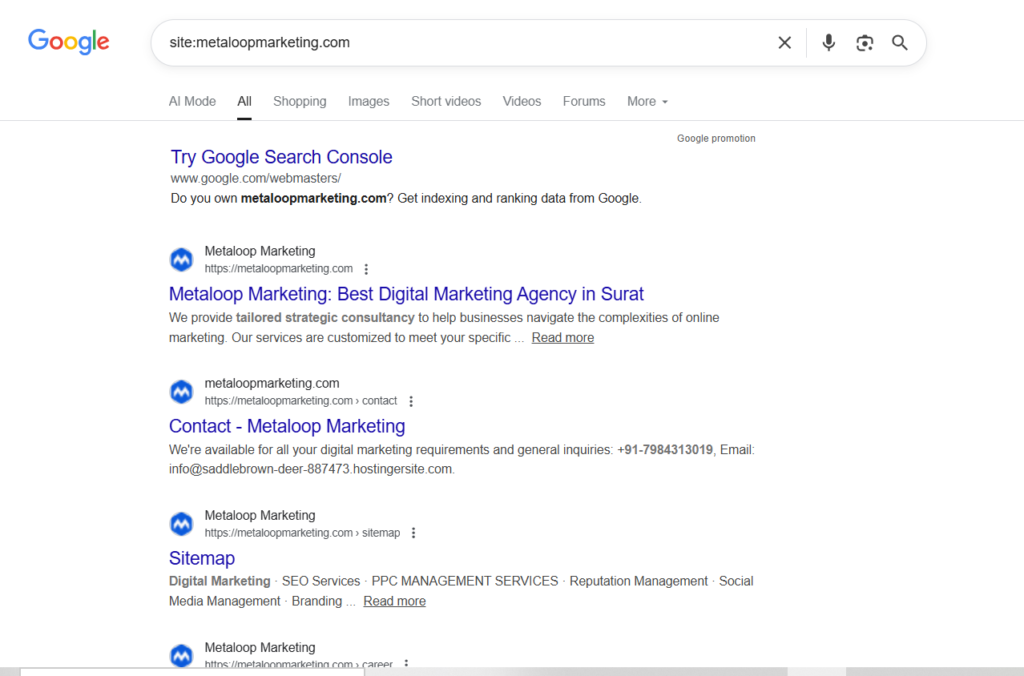
The simplest way to do this is by using the site search operator function in Google. You start by typing your keyword or phrase, followed by the website’s domain using the site operator. For example, if you want to find content related to SEO on a specific website, you can enter your keyword along with site followed by the domain name.
This method filters out all other results and shows only the pages from that website where your term appears. It is especially useful for large websites with hundreds of pages, where finding a single article manually would take much longer. For marketers, this technique is also valuable for auditing content, checking competitor blogs, or locating older posts quickly.
If you want to search the website, the very simplest way is to type the website URL. Type the website and keep the site: search operator before it. As it will be site:metaloopmarketing.com, and hit enter. This will give you all the pages that the site has, which are indexed on Google.
Simply add site:metaloopmarketing.com (or any website domain name that you want to search) and you will see results for every instance of that term on that specific website.
Google Autocomplete Predictions
As soon as you start typing in the Omnibox, Google begins suggesting search phrases. These autocomplete predictions are based on popular searches, trends, and how often users look for similar terms. Whether you choose to search Google or type a URL, this feature works automatically in the background.
In some cases, you may notice that suggestions do not appear. This usually happens when the search term is very new, rarely used, or restricted by Google’s policies. Autocomplete is designed to guide users toward commonly searched and relevant phrases, not every possible variation.
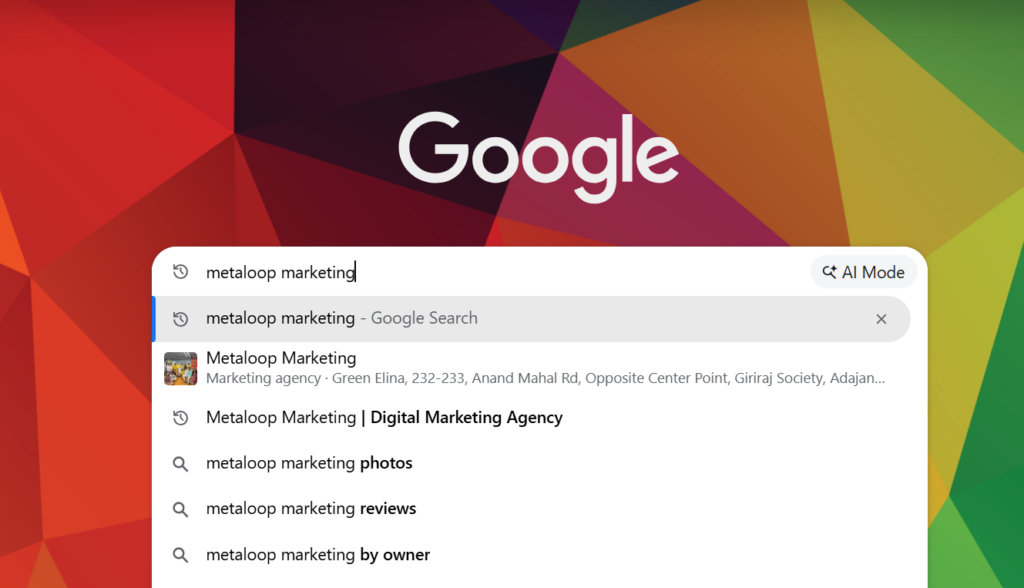
From a usability standpoint, autocomplete saves time and helps refine searches before you even press enter. You can also exclude certain suggestions or continue typing to narrow down results. Over time, this feature has become an essential part of how users discover information quickly and efficiently.
Using Voice Search
Voice search adds another layer of convenience to the way people search online. Instead of typing, you can simply speak your query and let Google handle the rest. This feature works on both mobile devices and desktop browsers, including Chrome.
To use voice search, you need to allow microphone access in your browser. Once enabled, clicking the microphone icon in the search bar lets you say your query out loud. Google then processes your words and displays relevant results, often interpreting natural language better than typed searches.
Voice search is particularly helpful when multitasking or when typing is not practical. It also improves accessibility for users who may find traditional typing difficult. As search behaviour continues to evolve, voice input is becoming a natural extension of how people interact with browsers and search engines.

Beyond basic search, Chrome extensions can further enhance the Omnibox. Some extensions add shortcuts, advanced search functions, or productivity tools that reduce the time spent switching between tabs and windows. Together, these features turn the browser into a more efficient workspace rather than just a tool for browsing.
Boosting Your Productivity with Smart Browsing
Using the Omnibox effectively can do more than help you find information faster. It can significantly boost your productivity, reduce errors, and improve multitasking. Knowing when to search Google or type a URL, and how to do it efficiently, ensures that you spend less time navigating the web and more time focusing on meaningful work.
Smart browsing also reduces errors. When typing a URL, the chances of landing on the wrong website or clicking on misleading search results are minimized. At the same time, using Google search for exploratory queries or troubleshooting helps uncover multiple perspectives, reviews, or solutions without relying on guesswork.
Multitasking becomes easier when you combine these strategies. For example, a digital marketer managing client campaigns can type a URL to quickly open dashboards while simultaneously using search Google or type a URL functionality to research trending keywords or competitor content. Voice search integration can further streamline this process, allowing queries to be performed without interrupting other tasks.
In practice, incorporating these habits into daily browsing creates a faster, more accurate, and organized workflow. Whether you are using the Omnibox to search Google or type a web address, understanding the right approach for each situation can make your online activities more efficient, productive, and less prone to errors.
Troubleshooting Common Issues
When it comes to Search Google or Type a URL, Even with the convenience of the Omnibox, users sometimes encounter problems that can slow down browsing or affect productivity. Common issues include the search bar not responding, URL redirects to unexpected pages, or delayed autocomplete suggestions. Most of these problems can be resolved with simple troubleshooting steps and browser customization.
If the search bar is not working, first ensure your browser is up to date. Outdated versions can cause glitches or prevent features from functioning properly. Clearing the cache and cookies often fixes performance issues, as stored data can sometimes conflict with the Omnibox’s functionality. Extensions or add-ons may also interfere, so temporarily disabling them can help identify the cause.
URL redirects can be frustrating, especially if they lead to unintended websites. These redirects may result from outdated bookmarks, cached pages, or even malware. Running a security scan, checking for malicious extensions, and verifying the URL before pressing enter can prevent unwanted navigation.
Customizing your browser can also improve reliability. Adjusting settings such as default search engine, autocomplete preferences, and startup behavior ensures the Omnibox works in a way that suits your workflow. Enabling predictive search and suggested sites can further enhance efficiency while reducing errors.
Privacy and Security Tips While Using Omnibox
Safe browsing is essential when using search Google or type a URL functionality. Always check that the websites you visit use HTTPS, which encrypts your connection and protects sensitive information. Avoid clicking on links from untrusted sources, as phishing attacks often exploit mistyped URLs or misleading search results.
Using private or incognito modes can help maintain privacy, especially when browsing on shared devices. Consider enabling features like browser warnings for unsafe sites and regularly updating passwords to protect accounts associated with frequently visited URLs.
By combining troubleshooting techniques with proactive privacy and security practices, you can make the most of the Omnibox while keeping your browsing safe, efficient, and error-free. These small steps ensure that searching Google or typing a web address remains both productive and secure.
Search Google or Type a URL: Which Option Is Better for You?
Choosing between searching Google or typing a URL depends largely on your intent and the task at hand. Both methods are effective, but knowing when to use each can save time, reduce frustration, and make your browsing more productive.
For casual browsing, such as checking social media, visiting news sites, or quickly opening a familiar website, typing a URL is usually faster. If you already know the exact address or have it bookmarked, entering it directly into the Omnibox eliminates extra clicks and helps you get to your destination immediately. This method also reduces the risk of landing on irrelevant or misleading search results.
On the other hand, research-heavy browsing or exploratory tasks benefit more from using Google search. For example, if you are looking for reviews on SEO tools, comparing marketing agencies, or finding tutorials on digital marketing strategies, searching Google gives you multiple options, perspectives, and the latest content. This approach allows you to discover new resources you might not know exist, making it ideal for decision-making and learning.
Consider these practical scenarios:
• Visiting a familiar site like metaloop.com: Type the URL directly to save time and go straight to the source.
• Finding the best SEO tool reviews: Use Google search to explore multiple articles, compare features, and read user opinions.
• Accessing internal dashboards or client portals: Typing the URL ensures quick access without the risk of typos or irrelevant results.
• Researching competitors or industry trends: Searching Google provides a wider range of information, helping you analyze and strategize effectively.
Ultimately, the best approach is situational. By understanding your intent and leveraging the strengths of both methods, you can browse smarter, work more efficiently, and make better use of your time online. Choosing the right option every time turns the simple act of entering text in the Omnibox into a strategic habit that enhances productivity.
FAQs
When should I search Google, and when should I type a URL?
You should type a URL when you know the exact web address or are visiting a frequently used site, as this is faster and more reliable. Search Google is better when you are exploring topics, comparing options, or looking for new content, as it provides multiple results and perspectives. Using the right method based on your intent saves time and improves browsing efficiency.
How does predictive search improve browsing efficiency?
Predictive search suggests queries as you type in the Omnibox, helping you find information faster without typing the full phrase. It reduces errors, highlights popular search terms, and often surfaces relevant results immediately, allowing you to reach your desired content with fewer clicks.
Can I use search Google or type a URL in other browsers?
Yes, most modern browsers like Firefox, Edge, Safari, and Opera support this functionality, though the wording may vary. The concept remains the same: you can either enter a web address directly or type keywords to search the web, leveraging the browser’s integrated search engine.
How do I search a website directly using Google?
To search a specific website, type your keyword followed by site: and the domain name. For example, entering site:metaloopmarketing.com in the Omnibox will show results containing that keyword exclusively on metaloop.com. This method is useful for research, content audits, or quickly finding information within a specific domain.
What are the benefits of Omnibox shortcuts?
Omnibox shortcuts save time by providing quick access to searches, bookmarks, and browser functions without navigating through menus. You can use operators like site:, filetype:, or directly type commands to reach content faster. They enhance productivity, reduce errors, and make browsing more streamlined, whether you are searching Google or typing a URL.
Conclusion
Mastering when to search Google or type a URL can transform the way you browse the web. Typing a URL is fast, reliable, and ideal for frequently visited sites, while searching Google helps you discover new content, compare options, and conduct research efficiently. By understanding the difference and applying the right method based on your intent, you can save time, reduce errors, and boost overall productivity.
Using features like predictive search, Google operators, voice search, and Omnibox shortcuts takes your browsing to the next level. These small adjustments turn everyday web navigation into a strategic habit that makes your workflow smoother and more effective.
Implement these tips today, experiment with both methods, and notice the difference in how efficiently you access information. Bookmark this guide for easy reference, and make smart browsing a regular part of your digital routine.

Write a Comment